
Parliamentary Ombudsman presents Annual Report 2025 to the Speaker of the House
Published June 05, 2026
Parliamentary Ombudsman presents Annual Report 2025 to the Speaker of the House
Published June 05, 2026
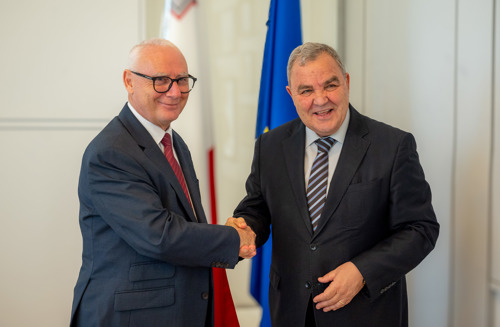
The Parliamentary Ombudsman, Judge Joseph Zammit McKeon, presented the statutory Annual Report for 2025 of the Office of the Ombudsman to the Speaker of the House of Representatives, the Hon. Anġlu Farrugia.
The report provides a comprehensive overview of the work carried out by the Office during the year, including its performance in the investigation of complaints, its engagement with the public, and its initiatives to promote fairness, accountability and good governance in public administration.
In his foreword to the Report, the Parliamentary Ombudsman highlighted that in 2025 the Office of the Ombudsman and the Commissioners remained at the forefront in ensuring fairness and justice, including by challenging bias and improper discrimination in the delivery of public services. He noted that, over the past thirty years, the Office has provided a free, impartial and accessible service to persons seeking assistance and redress.
The Ombudsman underlined that the work of the Office goes beyond resolving individual complaints. Through its investigations, the Office identifies patterns of administrative failure and recommends improvements aimed at strengthening accountability, transparency and responsiveness within the public service and the public administration.
During 2025, the Office handled 625 complaints, representing an 11% increase over the previous year. The Office also provided assistance to 812 persons, an increase of 6% over the previous year. This continued rise in complaints and enquiries reflects sustained public recourse to the Ombudsman institution and confirms the Office’s role as an accessible point of reference for persons seeking guidance, assistance or redress.
The Report also records that 575 complaints were closed during 2025. Of these, 194 cases, or 34%, were closed in favour of the complainant. Out of these 194 cases, 172, or 89%, were effectively resolved through the Ombudsman’s intervention, including through informal action, implementation of recommendations, or resolution during the investigation.
The Ombudsman noted that when public bodies act on the Office’s recommendations, they put good governance into practice. However, when recommendations are ignored, this creates frustration for complainants and represents a missed opportunity to improve public services. In 2025, a total of 22 reports were sent to Parliament after recommendations made by the Ombudsman or the Commissioners were not accepted or implemented by the respective authorities.
The Annual Report also refers to the challenges posed by rapid technological change, including the increased use of digital tools and artificial intelligence in public administration. The Ombudsman stressed that such technologies must reinforce, not replace, personal accountability, and that strong human oversight is necessary to prevent bias and protect the rights of persons.
The Report also includes the annual reports of the three specialised Commissioners for Education, Environment and Planning, and Health.
Judge Zammit McKeon concluded that the Office would continue to serve as a bridge between persons and the public administration, ensuring that complaints are heard, maladministration is addressed, and public authorities are encouraged to act with fairness, respect and accountability.

