
Office of the Ombudsman participates in ENNHRI conference on the execution of European Court of Human Rights judgments
Published June 24, 2026
Office of the Ombudsman participates in ENNHRI conference on the execution of European Court of Human Rights judgments
Published June 24, 2026
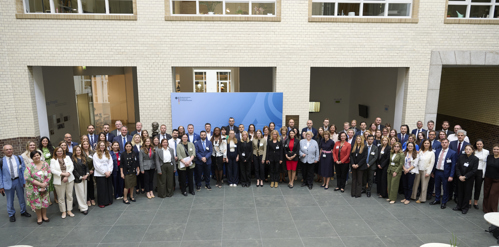
The Office of the Ombudsman was represented by Dr Marilyn Grech, Senior Investigating Officer, at the thematic event “Execution of Judgments of the European Court of Human Rights”, organised jointly by the European Network of National Human Rights Institutions (ENNHRI), the Council of Europe, and the Federal Ministry of Justice and Consumer Protection of Germany in Berlin. The event brought together National Human Rights Institutions (NHRIs), national execution coordinators, representatives of the Council of Europe, and academics to discuss ways of strengthening the implementation of judgments delivered by the European Court of Human Rights.
The execution of judgments of the European Court of Human Rights is a fundamental element of the Convention system. While responsibility for implementation rests primarily with States, the conference highlighted the growing importance of cooperation between national authorities, NHRIs, civil society organisations, and the Council of Europe in ensuring that judgments are implemented effectively, transparently, and without unnecessary delay.
Participants discussed the respective roles of NHRIs and national execution coordinators, exchanged experiences on challenges and good practices, and explored ways of strengthening structured cooperation at national level. Particular attention was given to the contribution that NHRIs can make through monitoring, reporting, engagement with public authorities, awareness raising, and support for structural reforms aimed at preventing recurring human rights violations.
Among the practices highlighted during the discussions were regular reporting to Parliament on the implementation of judgments, the publication of action plans and friendly settlements to enhance transparency and public engagement, and stronger dialogue between governments, NHRIs, and civil society organisations. Participants also discussed the use of Rule 9 submissions before the Committee of Ministers of the Council of Europe, which allow NHRIs and civil society organisations to provide information on the execution of judgments and contribute to the supervisory process.
Reference was also made to a recent Council of Europe study examining domestic capacity for the rapid execution of judgments. The study highlights the importance of maintaining effective dialogue between national coordinating authorities, National Human Rights Institutions, and civil society organisations in order to strengthen implementation mechanisms and ensure lasting reforms.
The conference further examined the role of NHRIs in promoting accountability and supporting the execution process through cooperation with governments and parliaments. Examples from several European countries demonstrated how NHRIs can contribute to identifying systemic issues, monitoring progress, and encouraging the implementation of measures required to comply with judgments of the European Court of Human Rights.
The event concluded that stronger cooperation between national execution coordinators and NHRIs can significantly improve the effectiveness and sustainability of execution processes. Participants agreed that independent oversight institutions have an important role to play in supporting the implementation of human rights standards and strengthening public confidence in the European Convention system.
The Office of the Ombudsman remains committed to promoting the effective protection of human rights and to contributing to discussions and initiatives that strengthen the implementation of the European Convention on Human Rights.
