
Mental health risks and concerns: strategic goals and best practices for prevention, treatment and care
Published August 03, 2026
Mental health risks and concerns: strategic goals and best practices for prevention, treatment and care
Published August 03, 2026
The Office of the Ombudsman’s 2026 thematic lecture will focus on mental health, bringing together international experts to discuss prevention, treatment, care, and the wider social factors that shape how people seek and receive support.
Mental health has become one of the most important public policy and public health issues of our time. It affects families, workplaces, schools, communities, health services, and public administration. It also raises important questions about dignity, access to care, prevention, early intervention, and the way society responds to persons facing distress, illness, vulnerability, or crisis.
This year’s thematic lecture, organised by the Office of the Ombudsman, will focus on “Mental Health Risks and Concerns: strategic goals and best practices for prevention, treatment and care”. The theme reflects the need to look beyond awareness alone and to consider how services, public institutions, professionals, and communities can work together to support people in a timely, respectful, and effective manner.
A central part of this discussion will be the need for modern service frameworks for severe mental illness. Persons living with serious mental health conditions require timely access to care, continuity of support, and services that respect their rights and dignity. A modern framework must consider the full patient journey, from early signs and first contact with services to treatment, recovery, and long-term support. It should also support better coordination between services, professionals, families, and communities.
The lecture will also address the importance of learning from serious untoward incidents. In sensitive areas such as mental health care, every serious incident provides an opportunity to understand what happened, identify risks, and improve systems. This approach supports a culture of learning, accountability, and prevention, while recognising the pressures faced by professionals working in complex care environments.
Another key issue is the importance of awareness, early help, and reducing stigma. Greater public understanding can encourage people to seek support before difficulties escalate. At the same time, care must remain proportionate, evidence based, and person centred. The aim is to create a culture where mental health is treated with the same seriousness as physical health, while ensuring that persons receive the right support at the right time.
The discussion will also consider related concerns such as gaming, gambling, and physician health. These areas show how mental health is shaped by social change, technology, work pressures, and daily life. They also highlight the need for prevention, early recognition, and accessible support, especially where persons may feel reluctant to speak openly or seek help.
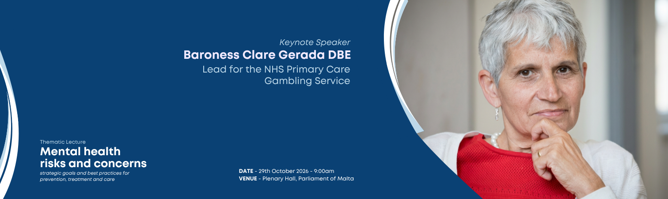
The speakers bring strong international expertise to this discussion. Baroness Professor Clare Gerada DBE is a leading family doctor and mental health advocate, best known for founding NHS Practitioner Health, chairing Doctors in Distress, and serving as past President of the Royal College of General Practitioners. Her experience is particularly relevant to primary care, professional wellbeing, and the importance of trusted first points of contact for mental health support.
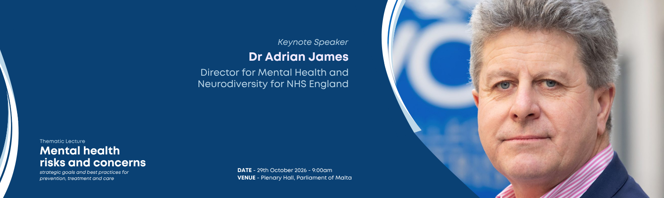
Dr Adrian James, Medical Director for Mental Health and Neurodiversity at the NHS, is Dr Adrian James, Medical Director for Mental Health and Neurodiversity at NHS England and former President of the Royal College of Psychiatrists, has played a major role in mental health policy, service improvement, workforce wellbeing, and equality in healthcare. During the Covid 19 pandemic, he led work on the risks faced by persons with a serious mental illness or learning disability, contributing to these groups being prioritised for vaccination. His work has also focused on achieving parity of esteem, placing mental health on an equal footing with physical health.
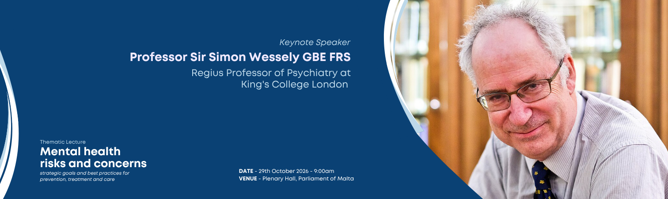
Professor Sir Simon Wessely, Britain’s first and only Regius Professor of Psychiatry, is a psychiatrist and epidemiologist whose work has shaped understanding of psychological medicine, military health, unexplained symptoms, clinical trials, and how people and populations respond to adversity. His interdisciplinary approach brings together medicine, law, history, sociology, and public policy, making his contribution especially relevant to a lecture that looks at mental health from both a clinical and societal perspective.
The thematic lecture will be held on 29 October 2026 in the Plenary Hall of the House of Representatives and will be presided by the Speaker of the House, the Hon Carmelo Abela. It will bring together public officials, professionals, academics, non-governmental organisations, and stakeholders for a national discussion on how prevention, treatment, and care can be strengthened.
