
Parliamentary Ombudsman addresses a high-level conference commemorating the 25th anniversary of the Ombudsman Institution of the Republic of Kosovo
Published November 02, 2025
Parliamentary Ombudsman addresses a high-level conference commemorating the 25th anniversary of the Ombudsman Institution of the Republic of Kosovo
Published November 02, 2025
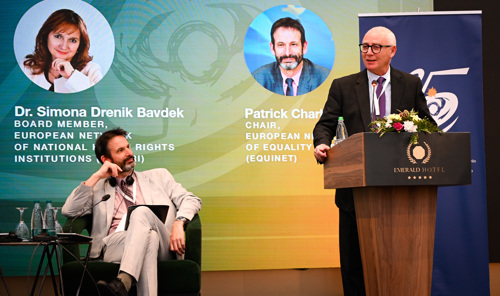
The Parliamentary Ombudsman, Judge Joseph Zammit McKeon, is participating in the commemoration of the 25th anniversary of the establishment of the Ombudsman Institution of the Republic of Kosovo. He is attending both in his national capacity and as Vice President of the International Ombudsman Institute European Region Board.
The anniversary is being marked by a high-level international conference entitled ‘The future of human rights amid global transformation. National challenges and international obligations’. The conference brings together ombudsman institutions, national human rights institutions and international networks to reflect on emerging global pressures and the need to safeguard fundamental rights within rapidly changing political, social and technological contexts.
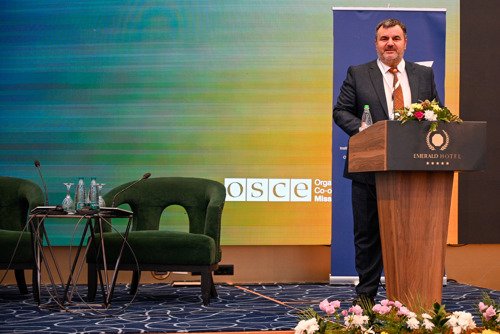
Opening the conference, the Ombudsman of Kosovo, Naim Qelaj, recalled the difficult path Kosovo has travelled and underlined the importance of continued international solidarity among ombudsman institutions. He stressed that human rights protection remains a constant challenge and that the role of independent oversight institutions must be taken seriously. Human rights, he said, should not only be defended but placed at the centre of policy making.
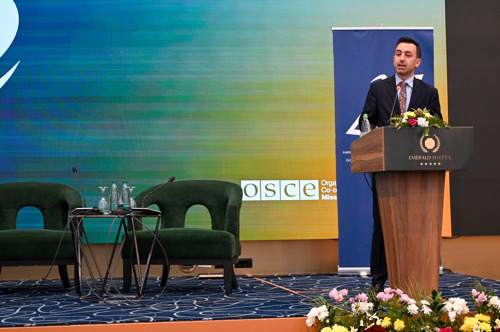
The Speaker of the Assembly of the Republic of Kosovo, Glauk Konjufca, described ombudsman institutions as an essential barrier against human rights violations, particularly at times of rapid change. He emphasised that democracy must be understood as an institutional architecture designed to protect minorities and fundamental freedoms.
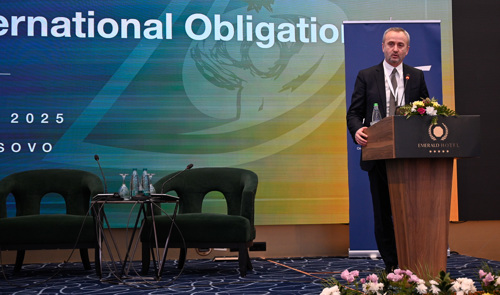
The President of the Constitutional Court of Kosovo, Nexhmi Rexhepi, warned that human rights are not self-sustaining and remain alive only through institutions mandated to defend them. He underlined that respect for human rights is a prerequisite for democracy and that institutional independence is not a privilege but a responsibility towards citizens.
In a video address, the Director of FRA, Sirpa Rautio, stressed that democracy is built on respect for the rule of law and human rights. She highlighted the importance of strong, independent and properly resourced national human rights institutions and recalled that international networks ensure that no institution stands alone.
Judge Zammit McKeon addressed the conference during the first plenary session entitled ‘Shifting priorities. Human rights in a changing world. Perspectives from human rights networks’. In his intervention, he noted that the post war human rights framework is being increasingly challenged using force, political expediency and indifference. He emphasised that international networks of ombudsman and human rights institutions play a critical role in defending those rendered vulnerable by conflict, displacement and injustice.
He highlighted that ombudsman and human rights institutions must combine complaint handling with a wider responsibility to scrutinise government conduct and promote systemic administrative change. Oversight institutions, he said, share a common commitment to the rule of law and good governance and must take up challenges wherever fundamental freedoms are placed at risk.
Turning to specific pressures, the Ombudsman referred to forced migration as a defining human rights challenge, stressing that safeguarding the dignity of migrants and refugees must prevail over purely managerial approaches to borders. He underlined the importance of close scrutiny of the new EU Pact on Migration and Asylum, particularly as implementation and compliance become the key focus.
He also addressed the human rights implications of armed conflict and humanitarian crises, stating that respect for humanitarian law and civilian protection is non negotiable. Ombudsman institutions, while unable to stop wars, must contribute to the international call for accountability, peace and human dignity.
On climate change, Judge Zammit McKeon noted that environmental action risks being sidelined by geopolitical and economic priorities, despite clear evidence of its impact on human rights. He referred to the three judgements of the European Court of Human Rights of the 9th April 2024 regarding the impact of climate change and the rights protected by Article 8 of the European Convention. He also referred to the 2025 Advisory Opinion of the International Court of Justice, which affirmed that states have obligations to protect the environment and recognised the right to a clean, healthy and sustainable environment as essential to the enjoyment of other human rights.
He also highlighted the growing importance of digital rights, including privacy, data protection and algorithmic fairness. Ombudsman institutions, he said, must adapt traditional human rights principles to the digital sphere and ensure that technological innovation enhances, rather than erodes, due process and equality.
In concluding, Judge Zammit McKeon recalled the principles of the Pristina Declaration adopted in 2023 by the Association of Mediterranean Ombudsmen, which remain highly relevant till this very day. These principles call for strong legal foundations, institutional independence, adequate funding, merit-based appointments and full adherence to the Paris and Venice Principles, alongside enhanced regional and international cooperation.
The plenary session was moderated by Majlinda Lulaj and also addressed by the People’s Advocate of Albania and President of the Association of Mediterranean Ombudsmen, Erinda Ballanca, Simona Drenik Bavdek, Board Member of ENNHRI and Deputy Ombudsman of Slovenia and Patrick Charlier, Chair of the European Network of Equality Bodies.
The conference continued with a second plenary session on national responses to global challenges, focusing on best practices in translating international human rights obligations into concrete policies and institutional action. This session was moderated by Anita Çavdarbasha Korenica.
The anniversary conference highlighted the continued relevance of the Ombudsman Institution of Kosovo over the past twenty five years and reaffirmed the shared responsibility of oversight institutions to protect human rights, strengthen democracy and uphold the rule of law in times of global transformation.

