
Second day of Nicosia conference focuses on safeguarding the independence of Ombudsman institutions
Published November 12, 2026
Second day of Nicosia conference focuses on safeguarding the independence of Ombudsman institutions
Published November 12, 2026
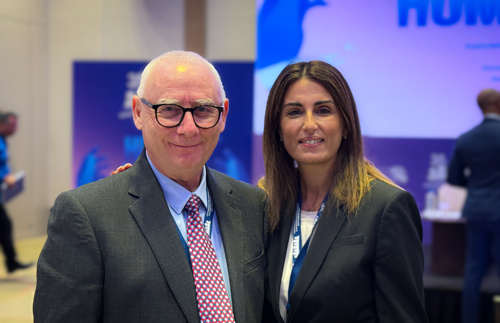
The second day of the regional conference in Nicosia marking the 35th anniversary of the Office of the Commissioner for Administration and the Protection of Human Rights of Cyprus focused on the independence and resilience of Ombudsman institutions.
Held under the theme “Independent Institutions under Threat: Cooperation, Solidarity and Multi-Mandate Responses”, the programme examined the challenges facing independent oversight bodies and the importance of international cooperation in protecting their ability to carry out their mandates effectively.
The opening of the second day of the conference focused on safeguarding institutional independence through international cooperation and solidarity.
European Ombudswoman Teresa Anjinho stressed that Ombudsman institutions form an essential part of the checks and balances of a democratic system and that their independence is vital to democracy itself.
She highlighted the importance not only of actual independence but also of how that independence is perceived. Ombudsman institutions, she said, must remain impartial and avoid being perceived as activists. This requires strong institutional safeguards, legal guarantees and sufficient powers to carry out investigations effectively.
She also emphasised that independence must be accompanied by accountability. Ombudsman institutions must conduct rigorous investigations, deal fairly with all parties and remain accountable for the way they exercise their mandate.
International solidarity when institutions come under pressure
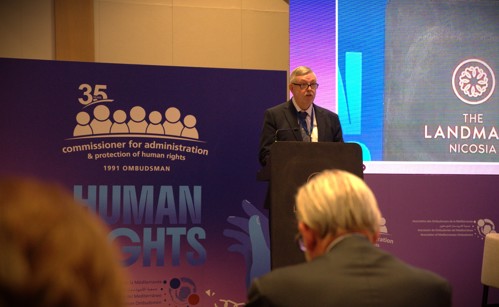
Peter Tyndall, former President of the International Ombudsman Institute and former Ombudsman and Information Commissioner of Ireland, noted that an Ombudsman carrying out the role properly will not always please the government of the day.
He highlighted the role played by international networks such as the International Ombudsman Institute and the Association of Mediterranean Ombudsmen when member institutions come under threat.
Referring to the experience of Poland, he recalled how an IOI delegation visited the country when the Ombudsman institution was facing significant pressure. The delegation met government ministers, stakeholders and civil society organisations, helping to draw international attention to the situation and mitigate the pressure being placed on the institution.
He stressed that respect for the rule of law cannot be taken for granted.
Mr Tyndall also referred to the formal international recognition enjoyed by National Human Rights Institutions through the United Nations system and expressed the view that Ombudsman institutions would benefit from a comparable framework of international recognition and protection.
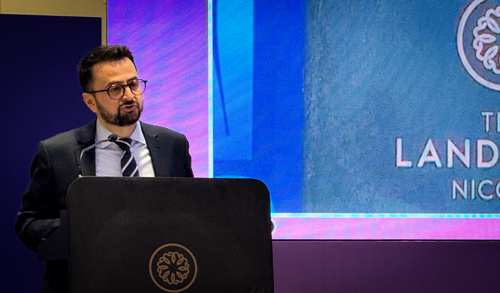
Endrit Shabani, President of the Association of Mediterranean Ombudsmen and People’s Advocate of Albania, reflected on the role society expects Ombudsman institutions to perform.
He stressed that Ombudsmen must be able to speak to those who exercise power and, equally importantly, must be heard by them.
He argued that the independence of an Ombudsman does not arise solely from the method of appointment or from legislation. It must be renewed and demonstrated every day through the way the institution exercises its mandate.
Subtle threats to institutional independence
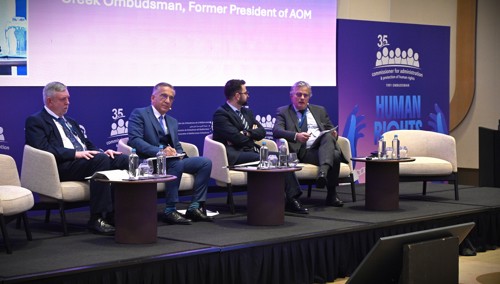
Andreas Pottakis, Greek Ombudsman and former President of the Association of Mediterranean Ombudsmen, focused on less visible threats to institutional independence.
He warned that indirect pressure can sometimes be more effective than direct interference. Such pressure may take the form of restrictions on budgets and staffing, limitations on resources, or legislative changes affecting the powers and capacity of the institution.
He underlined the importance of Ombudsman networks and international organisations, including the Council of Europe and the United Nations, in supporting institutions facing such pressures.
The discussion also addressed the Venice Principles, which have provided an important international framework for the protection and strengthening of Ombudsman institutions. Participants noted, however, that the Principles do not include a formal compliance mechanism.
Reference was also made to the IOI peer review process, through which fellow Ombudsmen can assess the effectiveness, independence and functioning of an institution.
The discussion highlighted the particular nature of the Ombudsman institution and the importance of the person entrusted with the office. The courage, determination and independence of the incumbent can be decisive in ensuring that the institution fulfils its role effectively.
Intervention by the Parliamentary Ombudsman of Malta
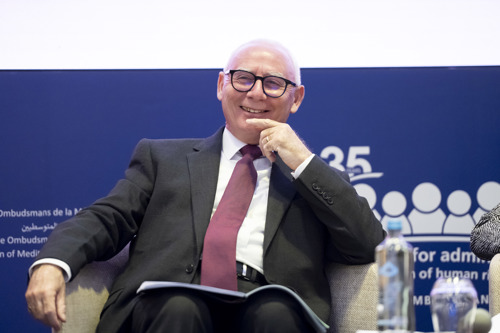
During the discussion, the Parliamentary Ombudsman of Malta, Judge Joseph Zammit McKeon, reflected on the approach an Ombudsman should take when exercising the mandate.
He stressed the importance of patience and perspective when dealing with complaints, noting that the work of the Ombudsman is not confined to major or high-profile issues. Everyday complaints can be equally significant to the persons affected and can expose weaknesses in public administration.
Judge Zammit McKeon also referred to the importance of using own-initiative investigations effectively and of exercising the powers entrusted to the Ombudsman firmly but always within the framework established by law.
Human rights, participation and preventive mechanisms
The second day continued with a session on multi-mandate Ombudsman institutions and the role of partnerships, participation and civil society in strengthening human rights protection.
The discussion examined how cooperation with civil society organisations, advisory committees and representative bodies can strengthen institutional legitimacy, public confidence and the protection of fundamental rights.
The final substantive session focused on strengthening the National Preventive Mechanism mandate through an EU-Council of Europe joint project. The session examined the results of the project, institutional improvements, capacity building and priorities for strengthening preventive mechanisms in the future.
The conference concluded with reflections on the evolving role of Ombudsman institutions and the importance of continued cooperation and solidarity between institutions and their international partners.
