
Ombudsplan 2027: growing public engagement with the Office of the Ombudsman
Published September 14, 2026
Ombudsplan 2027: growing public engagement with the Office of the Ombudsman
Published September 14, 2026
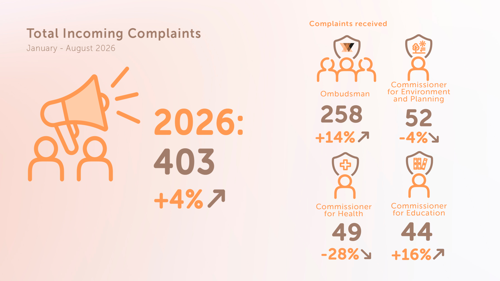
The Ombudsplan 2027 performance review points to a clear increase in public engagement with the Office of the Ombudsman during the first eight months of 2026.
Between January and August, the Office received 403 complaints, an increase of 4% over the same period in 2025. Of these, 258 complaints were handled by the Parliamentary Ombudsman, 52 by the Commissioner for Environment and Planning, 49 by the Commissioner for Health and 44 by the Commissioner for Education.
The increase in complaints was accompanied by a much stronger rise in requests for assistance. During the same period, the Office assisted 684 persons, representing a 36% increase compared with the previous year. Assistance is provided in cases where a person may not ultimately lodge a formal complaint but requires guidance, information or direction to another competent authority.
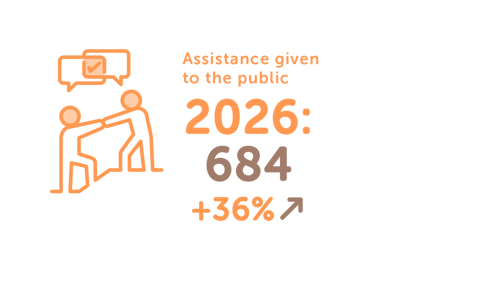
This increase is significant because it shows that the public is approaching the Office for more than formal investigations. The Ombudsman is increasingly being used as an accessible point of reference by persons who need help understanding how to address a problem with public administration.
This trend reflects the Office’s continued emphasis on outreach and accessibility. During the year, greater attention was placed on explaining the functions and services of the Ombudsman, maintaining dialogue with the public and stakeholders, and ensuring that persons understand when and how they may seek assistance. The Office has also continued its engagement with public bodies, civil society, international institutions and communities whose members may be less familiar with the Ombudsman’s services.
More cases finalised
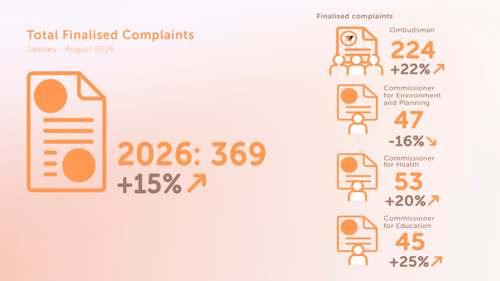
The figures also show an increase in the number of investigations concluded. Between January and August 2026, the Office finalised 369 cases, 15% more than during the same period in 2025.
The Parliamentary Ombudsman concluded 224 cases, an increase of 22%. The Commissioner for Health finalised 53 cases, up 20%, while the Commissioner for Education concluded 45 cases, an increase of 25%. The Commissioner for Environment and Planning finalised 47 cases, 16% fewer than in the previous year.
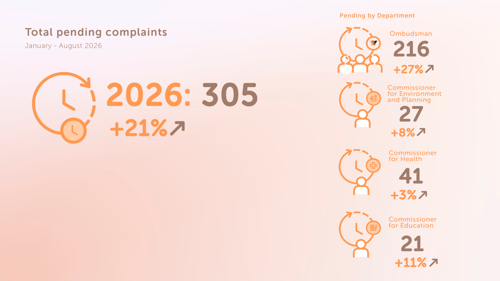
At the beginning of 2026, the Office had 305 investigations pending from previous periods, 21% more than at the corresponding point in 2025. The increase in pending cases needs to be considered alongside both the higher number of incoming complaints and the increased number of cases finalised during the period.
What people are complaining about
The nature of complaints continues to highlight recurring concerns in the public administration.
Unfair treatment or lack of equity remained the most frequently alleged form of maladministration, accounting for 160 complaints, or 40% of the total. This was followed by undue delay, failure to act and waiting list related issues, which accounted for 91 complaints, or 23%. Together, these two categories represented almost two thirds of all complaints received.
The same pattern is evident when looking at cases where maladministration was either sustained or the matter was resolved. Of the 114 sustained and resolved cases, unfair treatment or lack of equity, together with delays, failures to act and waiting list related concerns, accounted for 63%.
These figures show that questions of fairness and timeliness remain central to the experience of persons dealing with public administration. While each complaint is assessed on its own circumstances, recurring patterns provide the Office with important evidence about areas where administrative practices may require wider attention.
Case outcomes
Of the 369 cases finalised during the period, 40 complaints were sustained and 89 were not sustained. A further 74 cases were resolved through advice or assistance. Sixty-seven cases were discontinued, 22 fell outside the jurisdiction of the Office and 77 were declined on grounds provided for under the Ombudsman Act.
The 74 cases resolved through advice or assistance are particularly relevant to the wider approach of the Office. Ombudsman work does not always require a lengthy formal investigation. Where appropriate, problems can be addressed through guidance, dialogue and engagement with the public body concerned.
Building trust through accessibility
The performance review and the Office’s outreach activity point in the same direction. More persons are approaching the Ombudsman, either to lodge a complaint or simply to seek assistance.
The 36% rise in assistance is therefore one of the clearest indicators in this year’s figures. It suggests that greater awareness is translating into greater use of the service and that more persons regard the Office as an independent and accessible place to seek guidance when dealing with public administration.
The challenge for the Office is to build on that trust while continuing to improve accessibility and to use the evidence emerging from complaints to promote better administration. The figures also show that the recurring issues of unfair treatment, delay and failure to act remain areas where further improvement is required from public bodies.
The Ombudsplan 2027 therefore presents two developments which must be considered together: stronger public engagement with the institution and continuing evidence of administrative shortcomings that affect persons in their dealings with the State. The Office will continue to address both by remaining accessible to the public while using its investigative work to encourage fairer, more responsive and more effective public administration.
