
Office of the Ombudsman participates in conference on the implementation of the EU Migration and Asylum Pact
Published June 18, 2026
Office of the Ombudsman participates in conference on the implementation of the EU Migration and Asylum Pact
Published June 18, 2026
Representatives of the Office of the Ombudsman participated in an international conference in Rotterdam, the Netherlands, dedicated to the implementation of the European Union Migration and Asylum Pact, which entered into force on 12 June 2026.
The conference was organised by the National Ombudsman of the Netherlands and President of the International Ombudsman Institute (IOI) European Region, Reinier van Zutphen, and brought together around 40 participants from 20 countries, including ombuds institutions, academics, policymakers and migration experts.
The meeting aimed to explore the implications of the new migration framework for ombuds institutions across Europe and to identify common priorities and challenges arising from its implementation.
The conference also provided an opportunity for participants to exchange experiences and discuss how ombuds institutions can remain effective within the new migration framework.
The Office of the Ombudsman was represented by Dr Brian Said, Head of Investigations, and Mr Jurgen Cassar, Head of Communications and Research.
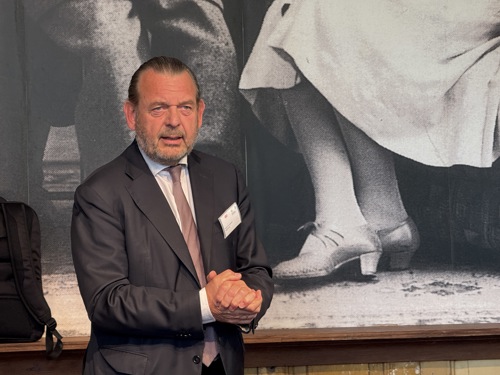
The role of ombuds institutions under the Migration Pact
Opening the conference, Reinier van Zutphen underlined the importance of developing a common understanding of the Pact and its impact on both national administrations and independent oversight institutions. He explained that the meeting sought to identify areas where ombuds institutions could work together in monitoring implementation and safeguarding fundamental rights.
The conference also marked the launch of a new Migration Working Group within the IOI European Region, which will provide a platform for continued cooperation and exchange of expertise among ombuds institutions.
Border procedures and detention
Addressing the first session, the Greek Ombudsman, Andreas Pottakis, described the Pact as a major challenge both for public administrations responsible for implementation and for oversight bodies tasked with monitoring compliance.
He highlighted the complexity of asylum and return border procedures, particularly where children may also become subject to border processes. Although the Pact is largely composed of directly applicable regulations, significant aspects remain dependent on national implementation.
Mr Pottakis stressed that effective protection of fundamental rights and adherence to the rule of law will largely depend on the capacity, expertise and preparedness of national administrations. He also underlined the need for monitoring bodies to possess adequate resources and specialised knowledge to assess implementation effectively.
Reception systems and humanitarian standards
The reception session was led by Maartje Janssen Loomans of the Netherlands Red Cross, who examined the growing complexity of reception systems across Europe.
Drawing on the experience of managing more than 400 emergency and semi-structured reception facilities since 2022, she explained that reception extends far beyond the provision of food, shelter and hygiene. Effective reception requires psychological support, social inclusion measures, community-building initiatives and access to specialised services.
The presentation highlighted increasing pressure on reception capacity due to continued displacement from Ukraine and the implementation of the Migration Pact, while many facilities remain designed for short-term accommodation rather than long-term stays.
It was emphasised that the professionalisation of reception services, supported by quality standards, independent oversight, accountability mechanisms, staff training and contingency planning, will be essential if Europe is to move from emergency responses towards a sustainable and dignified reception system.
Independent monitoring mechanisms
The session on monitoring and independent monitoring mechanisms was introduced by Ülle Madise, Chancellor of Justice of Estonia.
She focused on the potential role of ombuds institutions within the independent monitoring mechanisms required under the Pact. It was recognised that the structure of these mechanisms is likely to differ from one country to another depending on national constitutional and administrative arrangements.
Participants discussed the significant additional responsibilities that such mechanisms may place on ombuds institutions and the corresponding need for increased expertise, staffing and financial resources.
Children and the Migration Pact
Professor Mark Klaassen of Leiden University and the Advisory Council on Migration addressed the implications of the Pact for children.
He noted that the new legislative framework represents a move towards greater uniformity in the application of EU asylum and migration law. Professor Klaassen stressed that the rights and best interests of children must remain central throughout implementation.
He emphasised that legal safeguards must be matched by effective practice, particularly in relation to vulnerability assessments, child-sensitive procedures, reception conditions and protection mechanisms.
Professor Klaassen also argued that the debate should not end with the entry into force of the Pact. Continuous monitoring and evaluation will be necessary to assess implementation and ensure that children's rights are respected in practice.
Return procedures and future challenges
The final thematic session was delivered by Professor Tineke Strik, Member of the European Parliament and Rapporteur on aspects of the Migration Pact.
Professor Strik examined the new return border procedure established by Regulation (EU) 2024/1349 and highlighted concerns regarding the absence of an independent fundamental rights monitoring mechanism during the return phase.
She also analysed the relationship between the new Return Border Procedure Regulation and the existing Return Directive, emphasising that Member States remain bound by safeguards relating to detention conditions, non-refoulement, vulnerability assessments, emergency healthcare and non-coercive measures.
Looking ahead, she drew attention to proposals to revise the Frontex Regulation and raised concerns about the adequacy of safeguards and accountability mechanisms accompanying any expansion of powers.
Key themes emerging from the discussions
Following the presentations, participants engaged in roundtable discussions using the "Polder Shop" format, allowing for open exchanges on national experiences and expectations regarding implementation of the Pact.
Several common concerns emerged. Participants noted that border procedures and detention measures risk lowering existing protection standards, while the independent monitoring mechanisms required by the Pact have not yet been established in most countries.
Questions were also raised regarding the protection of children, the practical organisation of returns and the operation of external processing arrangements.
Strengthening cooperation between ombuds institutions
The conference concluded that the Migration and Asylum Pact present significant challenges for public administrations and oversight institutions alike.
At the same time, it offers an opportunity for ombuds institutions across Europe to strengthen cooperation, share expertise and contribute collectively to safeguarding fundamental rights within the new migration framework.
The newly established IOI Europe Migration Working Group will provide an important forum for continuing these discussions and for supporting ombuds institutions in monitoring the implementation of the Pact in the years ahead.
