
Mental health risks and concerns: international experts address the Office of the Ombudsman’s thematic lecture in Parliament
Published October 30, 2026
Mental health risks and concerns: international experts address the Office of the Ombudsman’s thematic lecture in Parliament
Published October 30, 2026
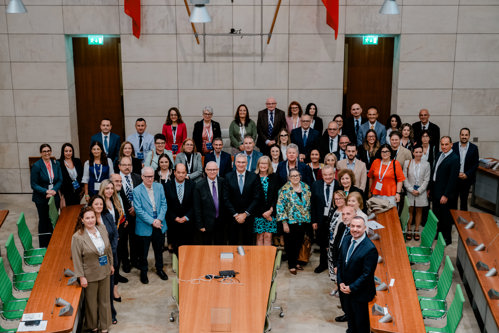
The third annual thematic lecture brought together international and Maltese experts to discuss prevention, treatment, care, mental health policy and the importance of protecting human dignity.
A national discussion on mental health
The Office of the Parliamentary Ombudsman, in collaboration with the House of Representatives, organised its third annual thematic lecture on 29 October 2026 in the Plenary Hall of the Parliament of Malta. This year's lecture focused on "Mental health risks and concerns: strategic goals and best practices for prevention, treatment and care".
The event, hosted by the Parliamentary Ombudsman, Judge Joseph Zammit McKeon, and presided over by the Speaker of the House of Representatives, the Hon. Carmelo Abela, brought together leading international and Maltese experts in psychiatry, primary care, public health and mental health policy.
The lecture provided a forum to examine mental health from clinical, institutional and societal perspectives. The discussions addressed prevention and early intervention, access to treatment, the development of community-based services, the importance of reducing stigma, the relationship between mental and physical health, and the need for public policies that safeguard the rights and dignity of persons experiencing mental health difficulties.
The event attracted considerable interest and was fully booked. Participants included Members of Parliament, Permanent Secretaries, Chief Executive Officers of public entities, Directors and Heads of Department, senior healthcare professionals, academics, representatives of non-governmental organisations and civil society, and persons occupying senior managerial and decision-making positions.
The broad representation reflected the growing recognition that mental health extends beyond the healthcare sector and requires coordinated responses from public institutions, professionals, families, workplaces and society.
Speaker of the House of Representatives: mental health as a shared societal responsibility
In his opening address, the Speaker of the House of Representatives, the Hon. Carmelo Abela, emphasised that mental health is fundamental to personal and societal well-being. He called for greater awareness, accessible support services and stronger collaboration among public institutions, healthcare professionals, families and communities.
Mr Speaker observed that, despite greater public understanding, stigma and prejudice continue to discourage persons from seeking assistance. He stressed the importance of encouraging open conversations about mental health and developing a culture in which mental health receives the same attention and importance as physical health.
He also highlighted prevention and early intervention as essential components of effective mental healthcare, together with an integrated, person-centred approach that safeguards the rights, dignity and well-being of those experiencing mental health difficulties.
Referring to the pressures faced by persons in public life, including Members of Parliament and healthcare professionals, Mr Speaker emphasised that mental health challenges can affect anyone, irrespective of their responsibilities or professional position.
His address also considered wider factors influencing mental health, including workplace pressures, technological developments, gaming and gambling, and environmental conditions.
Parliamentary Ombudsman: mental health services must be designed around the person
The Parliamentary Ombudsman, Judge Joseph Zammit McKeon, placed human dignity, accessibility and institutional responsibility at the centre of his address.
He emphasised that mental health should be regarded as a concern for society as a whole, extending beyond the treatment of illness to the creation of conditions that allow persons to recognise distress, seek support and receive appropriate care.
The Ombudsman observed that statistics, while important, can sometimes conceal the human realities behind mental health difficulties. He referred to persons experiencing anxiety, depression, loneliness, work-related stress and other challenges that may not always be visible to others.
He argued that the response to mental health must extend beyond recognising illness and providing treatment. Society must also develop the capacity to identify difficulties early, respond appropriately and accompany persons through recovery.
Prevention before crisis
The Ombudsman devoted particular attention to prevention, emphasising the responsibility of public institutions to identify risks and provide support before difficulties escalate.
Speaking from the perspective of an independent constitutional oversight institution, he raised questions about whether schools provide safe environments for children to express their difficulties, whether workplaces adequately recognise human limitations, whether older persons have opportunities for meaningful social participation, and whether public services are sufficiently accessible to persons experiencing mental health challenges.
He identified excessive workloads, bullying, discrimination, insecurity and social isolation as factors that can negatively affect psychological well-being.
These considerations, he explained, may require adjustments in policy and administration to strengthen protective measures and ensure that public services respond to persons' circumstances and needs.
From listening to meaningful action
Another central message of the Ombudsman's address concerned the importance of listening and responding.
While encouraging persons to speak openly about their mental health is essential, he emphasised that doing so creates a corresponding responsibility for institutions, professionals and society to listen and act.
He argued that compassion and understanding must be accompanied by practical measures that enable persons to obtain the assistance they require.
The Ombudsman highlighted the importance of primary healthcare and community-based services, which can help persons access support at an earlier stage and maintain their connections with family, employment and community life.
He stressed that accessibility should be understood in practical terms, including affordability, reasonable waiting times and services that persons can navigate and use effectively.
Central to this approach was his message that "The system must be designed around the person", rather than expecting persons to adapt to the system's operational priorities and requirements.
Human dignity and the right to appropriate care
The Parliamentary Ombudsman also addressed the relationship between mental health, fundamental rights and human dignity.
He stressed that mental health difficulties must never diminish the protection of a person's rights. Access to appropriate care, protection against degrading treatment and freedom from discrimination must remain central to mental health services.
He advocated person-centred, rights-based and recovery-oriented care, recognising that recovery extends beyond managing symptoms. It also involves rebuilding relationships, regaining autonomy, returning to education or employment, and restoring hope and purpose.
The Ombudsman also highlighted the important role of families and carers, whose emotional and practical responsibilities require recognition and support.
He concluded by calling for a shift from awareness towards meaningful social and institutional responsibility:
"We have to move on from awareness to caring behaviour and responsibility."
His address reinforced the role of the Office of the Ombudsman in promoting good administration, safeguarding human dignity and encouraging public institutions to place the needs and rights of persons at the centre of service delivery.
Baroness Clare Gerada: strengthening primary and community healthcare
Baroness Clare Gerada DBE, a leading British general practitioner, mental health advocate and former President of the Royal College of General Practitioners, contributed to the lecture through a recorded video message.
Baroness Gerada, who is of Maltese heritage and serves as a crossbench member of the House of Lords, was unable to attend in person because of parliamentary commitments relating to amendments she had tabled to health legislation being debated in London.
In her message, she expressed her regret at being unable to address the Maltese Parliament in person and reflected on the pressures facing healthcare systems, including ageing populations, increasingly complex health needs and the growing demand for care.
She emphasised that effective healthcare systems require strong foundations in primary and community care, supported by continuity of treatment and healthcare professionals who can assist persons within their communities and homes.
Referring to reforms being discussed in the United Kingdom, she identified three important directions for healthcare development: the transition from hospital-based to community-based care, from analogue to digital systems, and from treatment towards prevention.
She cautioned that without sufficient investment in primary and community services, healthcare systems risk becoming increasingly dependent on specialist interventions and hospital-based treatment.
Her contribution reinforced the importance of integrated, accessible services that respond to the changing needs of patients while supporting continuity of care.
Dr Adrian James: prevention, early intervention and modern mental health services
Dr Adrian James, Medical Director for Mental Health and Neurodiversity at NHS England and former President of the Royal College of Psychiatrists, delivered a keynote address examining approaches to mental health prevention, treatment and social care.
Drawing on his experience in clinical practice, healthcare management, regulation and national mental health policy, Dr James discussed the challenges facing mental health services and the opportunities for improvement through evidence-based approaches and innovation.
He acknowledged Malta's mental health policy framework, referring to the country's strategic commitment to dignity, autonomy, human rights and the development of community-based services.
Prevention and early intervention
A significant part of his address focused on reducing stigma and encouraging persons to seek professional assistance when required.
Dr James observed that greater openness about mental health represents important progress, although it must be accompanied by public understanding of the differences between ordinary emotional difficulties, significant psychological distress and mental illness requiring clinical intervention.
He also drew attention to the physical health of persons living with severe mental illness, emphasising the importance of screening, prevention and timely treatment for other health conditions.
He highlighted the benefits of early intervention in schools, referring to mental health support teams in the United Kingdom that work alongside teachers to promote awareness, recognise difficulties, address bullying and facilitate access to specialist services.
Dr James also discussed the influence of social media and emerging technologies on children and young persons. While recognising the benefits of digital technology and artificial intelligence, he raised concerns about harmful online content, algorithms and the potential impact of technology on psychological development and well-being.
Treatment and community-based support
Turning to treatment, Dr James highlighted the importance of continued research and investment in developing effective interventions.
He outlined approaches being tested in the United Kingdom, including integrated community mental health centres that offer accessible support through multidisciplinary services.
These centres seek to bring together psychological therapies, clinical treatment, social support and assistance related to employment, housing and other needs, reducing the need for persons to navigate multiple services.
He also emphasised the importance of timely access to talking therapies, early intervention in conditions such as psychosis, and greater collaboration between healthcare professionals, families and community organisations.
Dr James concluded by reflecting on the importance of quality improvement, responsible technological innovation and the effective use of healthcare resources.
Despite the potential benefits of technology, he stressed that mental healthcare remains fundamentally dependent on human relationships, personal understanding and direct interaction.
Commissioner for Health: reducing stigma and strengthening human connections
Professor Raymond Galea, Commissioner for Health within the Office of the Parliamentary Ombudsman, addressed the wider social and institutional responsibilities associated with mental health.
His contribution highlighted the importance of moving beyond awareness towards practical changes in personal attitudes, workplace cultures and community relationships.
Professor Galea observed that persons experiencing anxiety, depression and other mental health difficulties may still encounter prejudice and misunderstanding. He stressed that seeking professional assistance should be recognised as a sign of strength rather than weakness.
He also emphasised the importance of personal well-being, healthy boundaries and recognising emotional difficulties. Attentive listening, genuine conversation and the willingness to support others were presented as essential elements of a caring society.
Referring to digital technologies and social media, the Commissioner noted that while these platforms facilitate communication, excessive use can contribute to isolation, unhealthy comparisons and emotional disconnection. Technology, he argued, should strengthen human relationships rather than replace them.
Professor Galea also addressed mental health in the workplace, highlighting the responsibilities of employers to promote psychologically healthy working environments through reasonable workloads, supportive management, open communication and access to assistance.
His central message was that mental health requires collective responsibility. Governments, healthcare professionals, employers, communities and persons themselves all have a role in reducing stigma and developing supportive environments.
Dr Sarah Wollaston: childhood obesity, mental health and public health policy
Dr Sarah Wollaston, former Member of Parliament for Totnes in Devon and former Chair of the cross-party Health and Social Care Select Committee of the United Kingdom Parliament, contributed a public health perspective to the lecture.
A general practitioner by professional background, Dr Wollaston focused on childhood obesity and its implications for physical health, psychological well-being, self-esteem and future opportunities.
She identified childhood obesity as a significant public health challenge shared by Malta and the United Kingdom, emphasising the importance of addressing it without reinforcing stigma or negative attitudes towards children experiencing weight-related difficulties.
Drawing on her experience in parliamentary scrutiny and public health policy, she highlighted the importance of using reliable data to understand the distribution of childhood obesity and the relationship between health outcomes and social disadvantage.
Dr Wollaston discussed measures adopted in the United Kingdom, including the Soft Drinks Industry Levy, as an example of how policy can encourage changes in the formulation of food and drink products.
She also referred to Amsterdam's community-based approach to childhood obesity, which combines early intervention, school-based measures, healthier environments and targeted support for communities facing greater risks.
Her contribution emphasised that complex public health challenges rarely have a single solution. Effective prevention requires coordinated policies that address education, nutrition, physical activity, social conditions and the wider environment in which children grow and develop.
Professor Anton Grech: the development and future direction of mental health services in Malta
Professor Anton Grech, Chairman of the Department of Psychiatry and Clinical Chairman of Mental Health Services Malta, delivered an address tracing the development of mental health policy and services in Malta.
He reflected on the changes introduced through the Mental Health Act, which came into force in 2013, describing the legislation as an important shift towards stronger patient rights, multidisciplinary treatment, greater patient participation and community-based care.
Professor Grech also discussed the development of Malta's mental health strategy, supported by the World Health Organization, which established community care, prevention and well-being as central priorities.
Progress in community-based services
He outlined developments in the organisation and provision of mental healthcare, including regionalisation, the expansion of community clinics, outreach services, psychological support and crisis intervention.
He referred to increased access to services through regional mental health teams, crisis and home treatment arrangements, and the availability of mental health professionals within emergency care.
Professor Grech also highlighted developments in specialised services, including neuropsychiatry, mental healthcare for persons with learning disabilities, and perinatal mental health services.
He discussed the implementation of Malta's Suicide Prevention Strategy, emphasising that prevention extends beyond crisis intervention to include timely care, accessible services and stronger social connections.
Integration, dignity and lived experience
An important part of his address concerned the direction of future mental health service development, particularly the planned integration of acute psychiatric facilities within the general hospital environment.
Professor Grech referred to the development of 230 acute psychiatric beds within Malta's general hospital system as an important step towards integrating physical and mental healthcare.
He explained that such integration reflects a wider shift away from institutional isolation towards services that promote clinical cooperation, social inclusion and human dignity.
He also highlighted the importance of involving persons with lived experience in the planning and delivery of mental health services.
Referring to the introduction of a paid expert-by-experience role, he emphasised that professional knowledge should be complemented by the perspectives of persons who have experienced mental illness, treatment and recovery.
Professor Grech further argued that mental health outcomes are influenced by decisions extending beyond the healthcare sector, including education, employment, housing, social inclusion and community life.
He called for a broader approach that moves from developing mental health services towards creating a mentally healthy society.
Concluding his address, he emphasised that investment in mental health should also be understood in terms of its wider social and economic value, including improved educational outcomes, greater participation in employment, stronger families and healthier communities.
Thematic Lecture by Professor Sir Simon Wessely: understanding the changing landscape of mental health diagnosis
Professor Sir Simon Wessely GBE FRS, Regius Professor of Psychiatry at King's College London, delivered the principal thematic lecture, examining changes in mental health, particularly among children and young persons.
His presentation drew on his involvement in an independent review examining the increasing prevalence of reported mental health difficulties and the substantial growth in diagnoses of neurodevelopmental conditions, particularly autism and attention deficit hyperactivity disorder (ADHD).
Professor Wessely observed that while there is widespread recognition of growing mental health concerns among younger generations, considerable debate remains about the causes and how healthcare systems should respond.
He discussed the influence of wider societal changes, including financial pressures, educational demands, digital environments, social media, loneliness and changing expectations among younger generations.
Awareness, diagnosis and the risk of medicalisation
A central part of his lecture examined the distinction between underdiagnosis, misdiagnosis and overdiagnosis.
Professor Wessely explained that increased awareness and greater willingness to seek assistance have contributed to important improvements in the recognition of mental health and neurodevelopmental conditions.
At the same time, he emphasised the importance of ensuring that diagnostic assessments remain thorough, clinically appropriate and supported by sufficient evidence.
He discussed the difficulties involved in distinguishing between ordinary variations in behaviour, emotional distress and conditions requiring a clinical diagnosis.
He also highlighted the pressures facing assessment services and the potential risks associated with fragmented care pathways, limited assessment time and inconsistent clinical practices.
Importantly, Professor Wessely stressed that diagnostic difficulties should be understood primarily as challenges within healthcare systems rather than as failures on the part of persons seeking help.
Placing needs before labels
Professor Wessely encouraged a broader discussion about the purpose and consequences of diagnosis.
While recognising that diagnosis can be essential for accessing appropriate treatment and support, he raised concerns about systems in which too much assistance depends on obtaining a formal diagnostic label.
He argued that persons can experience genuine difficulties and require meaningful support even when their circumstances do not necessarily meet the criteria for a particular diagnosis.
His presentation therefore emphasised the importance of assessing the needs of persons rather than allowing diagnostic categories alone to determine access to assistance.
He suggested that teachers, social workers, community professionals and other services can play a greater role in recognising needs and providing support, alongside healthcare professionals.
Professor Wessely also reflected on the influence of media coverage and public debate, observing that discussions about mental health diagnosis can become polarised, making balanced interpretation of evidence particularly important.
His lecture reinforced the need for mental health systems to combine increased awareness and accessibility with careful clinical assessment, proportionate responses and support that reflects each person's circumstances.
Interactive discussion with participants
The thematic lecture also included an interactive question-and-answer session, moderated by the Parliamentary Ombudsman, Judge Joseph Zammit McKeon, and Professor Raymond Galea, Commissioner for Health.
The session provided an opportunity for participants to engage with the speakers and explore issues arising from the presentations, drawing together perspectives from healthcare, public administration, policy and society.
From awareness to responsibility: the wider significance of the thematic lecture
The third annual thematic lecture of the Office of the Parliamentary Ombudsman brought together different perspectives on a subject that affects persons, families, institutions and communities.
Although the speakers approached mental health from different professional backgrounds, several common principles emerged.
Prevention and early intervention remain essential to improving mental health outcomes. Awareness and the reduction of stigma must be accompanied by accessible support and appropriate treatment. Mental healthcare should be integrated with physical healthcare and supported by strong community services.
The discussions also emphasised the need to recognise the wider influences on mental health, including social relationships, working conditions, education, technology and economic circumstances.
A recurring theme was the importance of placing persons at the centre of services, recognising their dignity, listening to their experiences and ensuring that support responds to their actual needs.
For the Office of the Parliamentary Ombudsman, these considerations are closely connected with its constitutional role of promoting good administration, accountability, fairness and respect for fundamental rights.
The thematic lecture also demonstrated the value of bringing international experience into national discussions, providing public officials, healthcare professionals, academics and civil society with opportunities to consider different approaches and reflect on practices that may contribute to improving public services.
By hosting this discussion in the Plenary Hall of the House of Representatives, the Office sought to reinforce the importance of mental health as an issue of national and institutional responsibility.
The central message emerging from the event was that improving mental health requires sustained cooperation between healthcare services, public institutions, professionals, families and communities.
As the Parliamentary Ombudsman emphasised in his address, awareness must lead to caring behaviour and responsibility. This principle remains central to building a society that responds to mental health challenges with understanding, effective support and respect for human dignity.
